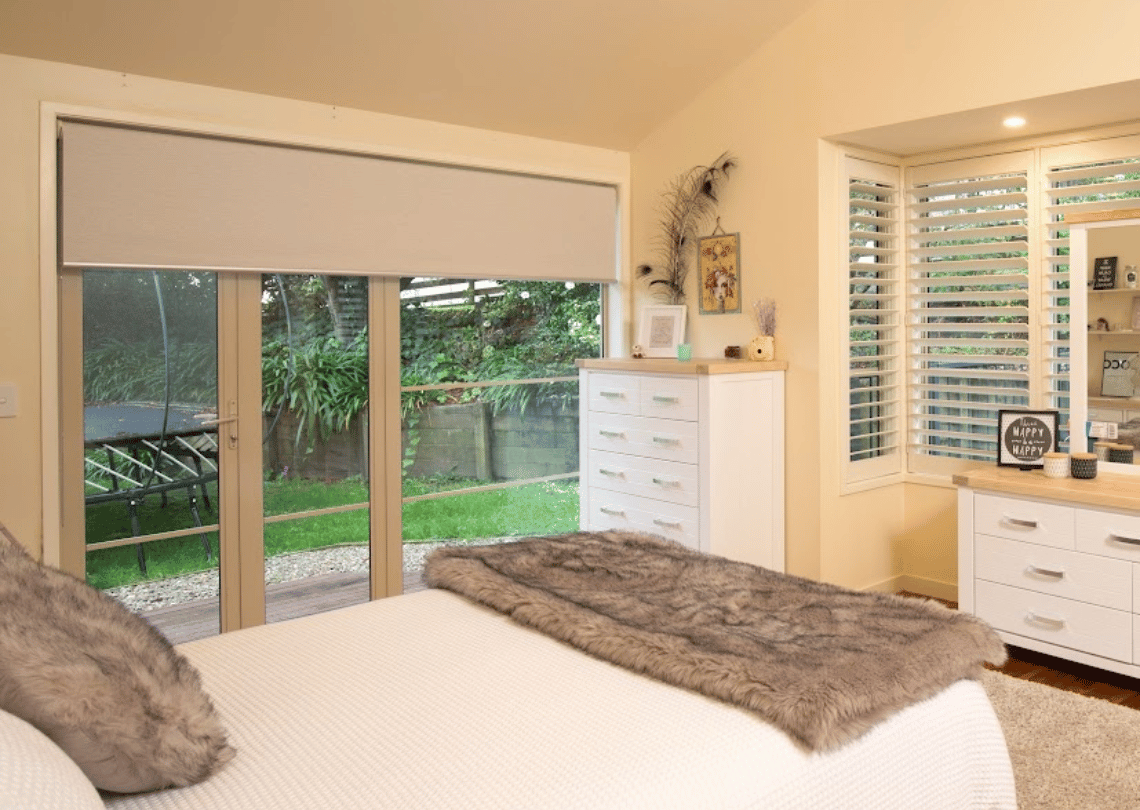
Are your blinds and curtains safe for young children and pets? If you have children or pets at home, cordless blinds are one of the simplest ways to reduce the risks associated with window-covering cords. Existing corded blinds can also be made safer in some cases with correctly installed safety devices, but it’s important to look at every window in your home and how it is being used.
When you’re preparing a nursery or making your home safer for a growing family, window coverings probably aren’t the first thing you think about. But loose blind cords can pose a serious strangulation risk to young children, while hanging cords can also be tempting for curious cats and dogs.
The good news is that there are plenty of child safe blinds and cordless options available. From cordless roller blinds to motorised window coverings, you don’t have to choose between safety and a window treatment that looks good in your home.
Here’s what to look for when choosing safer window coverings in New Zealand, plus a simple room-by-room checklist to help you spot potential hazards.
Why are blind cords a safety risk?
Blind cords can become dangerous when they are within reach of a young child.
A child can become tangled in a loose operating cord or inner cord, particularly when climbing, playing or sleeping near a window. Product Safety New Zealand warns about the risks associated with window-covering cords and recommends choosing coverings without accessible cords where possible.
Furniture can also change the risk. A cord that is out of reach from the floor may become easily accessible when there is a cot, bed, sofa, chair or toy box underneath the window.
This is why blind cord safety isn’t just about the blind itself. It’s also about what’s around it.
What are the current NZ safety expectations?
If you’re buying new window coverings for a home with young children, Product Safety New Zealand recommends choosing options without accessible cords where possible.
For existing blinds, cords should be kept out of children’s reach. Appropriate cord tension devices can be used in some situations to secure loose or looped cords. These need to be installed correctly and securely according to the manufacturer’s instructions.
It’s also worth understanding that not every safety recommendation is a mandatory legal requirement.
New Zealand has both mandatory and voluntary product standards, and requirements can vary depending on the product. Don’t assume a blind is automatically safe simply because it’s new or has a particular safety feature.
If you’re unsure, ask your window-covering supplier how the operating mechanism works, what safety features it has and whether it meets the relevant requirements for that product.
Safety note: Product requirements and standards can change and may differ between types of window coverings. Always follow the manufacturer’s instructions and ask your supplier about the specific product you’re considering.
Are cordless blinds safer for children?
For families with young children, cordless blinds are a good place to start.
Instead of using a hanging cord or chain, a cordless system uses a different mechanism to raise and lower the blind. This removes the accessible operating cord that can otherwise become a hazard.
Options can include:
- Cordless roller blinds
- Cordless honeycomb or cellular blinds
- Cordless Roman-style blinds where a suitable safe mechanism is available
- Motorised blinds
- Other coverings designed without accessible operating cords
If you’re looking for cordless blinds NZ families can use in a nursery, bedroom or living space, look beyond the fabric and colour. The operating mechanism is an important part of the decision too.
You should also think about what the room needs. A nursery might need blockout for daytime naps, while a living room could benefit from light-filtering fabric and insulation.
What about motorised blinds?
Motorised window coverings are another option for families wanting to remove accessible cords.
Rather than pulling a cord or chain, the blind can be operated using a wall switch, remote or compatible smart-home system, depending on the product.
Motorisation can be particularly useful for large or high windows, or when you want to operate several blinds without walking around the house.
However, motorised doesn’t mean you can forget about safety altogether. Remotes, switches, batteries and other components should still be installed and used appropriately, with the manufacturer’s instructions followed.
Can existing corded blinds be made safer?
If you’re not ready to replace all of your window coverings, there are ways to reduce the risk from some existing corded blinds.
A cord tension device can keep a loose cord secured and away from children. Product Safety New Zealand recommends that these devices are securely attached to the wall or window frame and that cords are kept taut.
However, a retrofit isn’t necessarily the right solution for every blind.
If you’re unsure whether an existing window covering can be made safe, have it assessed by a professional rather than trying to modify the mechanism yourself.
Older blinds should also be checked for damage, worn cords or missing parts. If a blind is difficult to operate or has loose cords, replacing it with a cordless option may be the better long-term solution.
Don’t forget about your pets
Children aren’t the only ones who can get themselves into trouble around window coverings.
Cats climb, jump onto furniture and investigate anything that moves. Dogs and puppies can also chew loose cords or become tangled in them.
SPCA New Zealand recommends keeping pets away from dangerous wires and curtain cords, particularly where they could be chewed or become tangled.
When checking your home, ask yourself:
Could my cat reach this cord?
Could my puppy chew it?
Could a cord get caught around a collar, paw or body?
A cordless window covering can be a practical choice for homes with both children and pets, particularly in rooms where they spend a lot of time.
A room-by-room window safety checklist
Walk through your home and look at each window. Get down to a child’s height and think about what they can reach, then consider what your pets can access too.
Nursery
- No loose or hanging blind cords within reach of the cot
- No accessible inner cords behind the blind
- Cot positioned away from the window covering
- No furniture giving your child access to the blind
- Consider a cordless or motorised option
- Check the blind and fittings for damage or wear
Children’s bedrooms
- Bed positioned away from blind and curtain cords
- Furniture can’t be used to climb to the window
- No loose or looped cords
- Safety devices are correctly installed
- Older or damaged blinds have been checked
Living areas
- Check windows behind sofas and chairs
- Look at windows near play areas
- Make sure furniture isn’t creating access to cords
- Check large windows and sliding doors
- Consider cordless options for high-use areas
Playrooms
- No cords within reach of children
- Toy storage isn’t positioned underneath a corded blind
- Windows children play around have been checked
- Consider cordless coverings for frequently used windows
Pet areas
- No hanging cords that could be chewed or tangled
- Cat trees don’t give pets access to cords
- Puppies and dogs can’t easily reach loose cords
- Blinds aren’t damaged from scratching or chewing
- Open windows have appropriate safety measures
Other rooms
Don’t forget your home office, guest bedroom, kitchen, dining area and any high or rarely used windows. A window that isn’t used often can still become a hazard if a child eventually finds their way to it.
When should you replace your blinds?
If you have old blinds with long, loose or looped cords, it’s worth considering whether replacement is the better option, particularly if you have a new baby, young children or pets.
You may also want to replace a blind if:
- It has damaged or worn cords
- Safety components are missing
- It is difficult to operate
- It is positioned close to a cot or child’s bed
- Furniture gives a child access to the cords
- Your pet can reach or chew the cords
- You aren’t confident the existing setup is safe
Replacing your blinds can also be a chance to improve other parts of the room. You could choose a cordless option while adding blockout, improving insulation or changing the amount of natural light coming in.
Making your windows safer doesn’t mean sacrificing style
When you’re preparing a nursery or making your home more family-friendly, safety should be part of the window-covering conversation from the beginning.
For many families, choosing cordless blinds is the simplest way to remove accessible operating cords. If you already have corded blinds, there may also be ways to make them safer without replacing everything straight away.
At Brightshine, we can help you work through the options, from cordless blinds to motorised window coverings, and find something that suits your home without compromising on the look you want.
Ready to switch to cordless?
Book a free in-home measure and quote with Brightshine. We’ll help you choose a window-covering solution that works for your home, your family and your everyday life.
FAQs
Can existing corded blinds be made safer without replacing them?
Yes. You can install cord tension devices securely to the wall or window frame to keep cords taut. However, retrofits are not suitable for every blind, so unverified setups should be assessed by a professional rather than modified yourself.
Why are blind cords hazardous even if they seem out of reach?
Nearby furniture, such as cots, beds, sofas, chairs, or toy boxes, allows children to climb up to window level. This gives them direct access to loose operating or inner cords, creating a serious entanglement and strangulation risk.
When should you replace your blinds rather than securing them?
You should replace blinds if they have worn cords, missing safety parts, or difficulty operating, or if they sit near cots, beds, or pet areas where cords remain accessible. If you cannot confirm an existing blind is completely safe, switching to a cordless option is recommended.